10 Ways Anger Management Therapy Boosts Emotional Health

Anger management therapy can transform how you handle stress, helping you achieve emotional balance and healthier relationships.
Did You Know?
Did you know that according to the American Psychological Association, uncontrolled anger contributes to higher rates of anxiety, depression, and heart disease? Studies reveal that nearly 1 in 5 adults report frequent difficulties managing anger, highlighting the importance of professional support. Anger management therapy offers a structured approach to understand triggers, manage responses, and improve overall emotional health.
By learning to regulate emotions, individuals gain clarity, confidence, and stronger interpersonal connections. In this article, we explore 10 ways anger management therapy boosts emotional health and how it can transform your life.

Understanding Anger Management Therapy
Anger management therapy is a structured approach that helps individuals recognize triggers, understand emotional responses, and develop strategies to manage anger constructively. Unlike general advice like “just calm down,” therapy digs deeper into the root causes of frustration and provides practical tools to respond effectively.
Why Professional Guidance Matters
Provides personalized strategies tailored to your emotional patterns.
Helps identify unconscious triggers that escalate conflicts.
Offers safe spaces to express feelings without judgment.
Supports long-term emotional resilience rather than quick fixes.
“Anger management is not about suppressing emotion; it’s about learning how to channel it productively,” says Dr. Lisa Feldman, a licensed psychologist specializing in emotional regulation.
10 Ways Anger Management Therapy Boosts Emotional Health
1. Enhances Emotional Awareness
Therapy teaches you to recognize subtle signs of frustration before they escalate. Through journaling, mindfulness exercises, and guided discussions, you gain insight into emotional triggers.
2. Reduces Stress and Anxiety
Learning coping mechanisms such as deep breathing, visualization, and cognitive reframing lowers physiological stress. Research shows individuals practicing structured anger management experience 30% reduction in anxiety symptoms.
3. Improves Relationships
How anger management therapy helps control anger and improve relationships is one of its most significant benefits. By understanding your reactions, you communicate more effectively and handle conflicts calmly, fostering trust and connection.
4. Promotes Physical Health
Uncontrolled anger can elevate blood pressure, cortisol levels, and heart rate. Anger management therapy encourages relaxation techniques that protect cardiovascular and immune health.
5. Builds Self-Esteem and Confidence
Managing anger effectively reinforces self-control and emotional mastery, boosting confidence in personal and professional settings.
6. Encourages Problem-Solving Skills
Therapy shifts focus from emotional reaction to constructive solutions, improving decision-making under pressure.
7. Provides Tools for Parenting and Work
Parents and managers benefit from structured anger management techniques, helping them model calm behavior and resolve conflicts productively.
8. Supports Mental Health
Combining therapy with counseling or support groups can reduce depression and anxiety while fostering resilience.
9. Prevents Aggressive Behavior
Therapy addresses underlying triggers and teaches alternatives to aggressive outbursts, reducing risks in personal and professional life.
10. Encourages Mindfulness and Emotional Regulation
Techniques like meditation, breathing exercises, and body scanning help you pause, reflect, and respond thoughtfully rather than react impulsively.
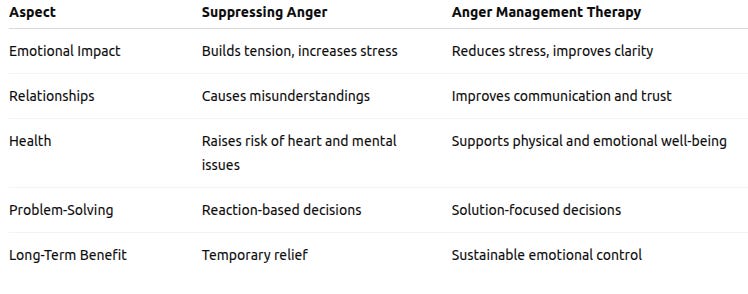
Table: Anger Management Therapy vs Suppression
Real-Life Example
Jessica, a 32-year-old teacher, struggled with irritability after long workdays. She enrolled in anger management therapy through Anger No More. Within weeks, she noticed fewer outbursts, improved communication with her partner, and a greater sense of calm. By understanding her triggers and practicing coping strategies, Jessica transformed her emotional health.
Benefits of Anger Management Therapy
The benefits of anger management therapy extend beyond emotional regulation:
Builds stronger interpersonal relationships.
Encourages healthier coping strategies.
Enhances productivity and focus.
Increases empathy and emotional intelligence.
Reduces long-term stress and health risks.
Internal CTA: Ready to take your emotional health to the next level? Discover how thousands are transforming their anger and relationships with Anger No More — click here to join the movement!
FAQs About Anger Management Therapy
Q1: How does anger management therapy work?
A: It helps individuals identify triggers, understand emotional responses, and develop strategies to manage anger constructively.
Q2: Who can benefit from anger management therapy?
A: Anyone struggling with anger, irritability, or relationship conflicts can benefit, including teens, parents, and professionals.
Q3: How long does therapy take to show results?
A: Many individuals notice improvements within a few weeks, but consistent practice ensures long-term emotional control.
Q4: Can therapy help prevent arguments in relationships?
A: Yes, it teaches communication skills, emotional regulation, and conflict resolution strategies.
Q5: Is anger management therapy only for extreme cases?
A: No, even mild or occasional anger can be improved, enhancing overall emotional health and wellbeing.
Conclusion
Anger management therapy is more than a way to control outbursts—it’s a path to emotional health, stronger relationships, and personal growth. Understanding how anger management therapy helps control anger and improve relationships, along with the benefits of anger management therapy, empowers individuals to achieve effective anger management and live with clarity, confidence, and balance. At Anger No More, we guide you every step of the way, helping you transform frustration into opportunity, stress into resilience, and anger into a tool for positive change. Take the first step today—your emotional health and relationships will thank you.